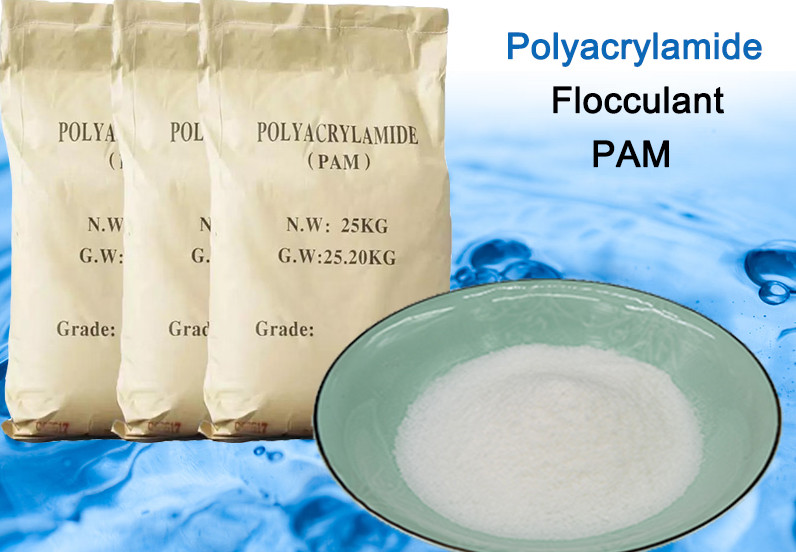
How does APAM work in wastewater treatment? This is a common question among engineers and environmental professionals who deal with industrial or municipal wastewater. Anionic Polyacrylamide (APAM) is one of the most effective flocculants used to remove suspended solids, organic matter, and colloidal particles from water. Understanding how APAM works helps operators achieve better treatment efficiency, lower costs, and cleaner effluent discharge.
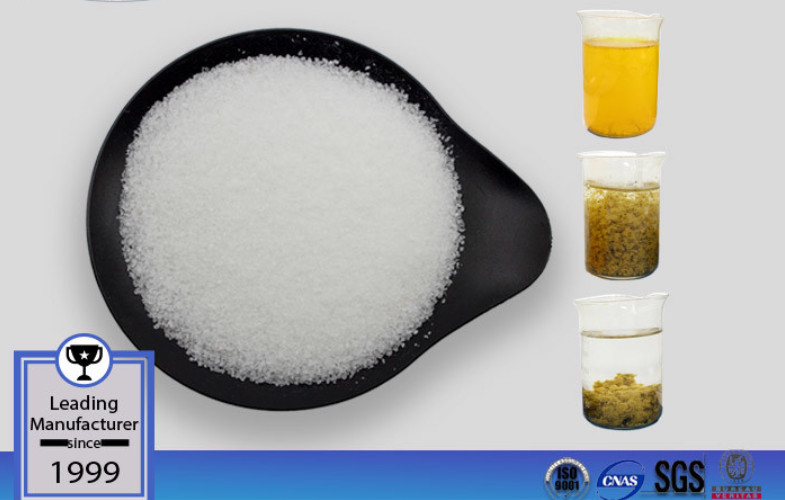
What Is APAM (Anionic Polyacrylamide)?
Anionic Polyacrylamide, abbreviated as APAM, is a water-soluble polymer derived from acrylamide with negatively charged functional groups. This anionic charge enables APAM to interact with positively charged particles and metal ions in wastewater.
APAM is widely applied in water and wastewater treatment, mining, paper manufacturing, and oil recovery. Its main function in wastewater treatment is to promote flocculation, a process that causes fine particles to aggregate into larger clumps (flocs) that can easily settle or be filtered out.
How Does APAM Work in Wastewater Treatment?
The working principle of APAM in wastewater treatment is based on electrostatic attraction and polymer bridging. Here’s how the process unfolds step-by-step:
- Charge Neutralization:
Wastewater often contains tiny suspended particles with positive or neutral charges. When APAM is added, its negatively charged polymer chains attract and neutralize these particles. - Polymer Bridging:
The long molecular chains of APAM attach to multiple particles simultaneously, creating bridges between them. This binding process forms larger aggregates known as flocs. - Floc Growth:
As more particles attach, the flocs increase in size and density. This helps them separate more easily from water. - Sedimentation and Separation:
Once formed, these flocs settle at the bottom of the treatment tank under gravity. Clear water can then be separated or filtered off.
In essence, how APAM works in wastewater treatment relies on its ability to alter particle surface charges and create a network of bound particles that can be efficiently removed.
The Role of APAM in Flocculation and Coagulation
Although the terms “coagulation” and “flocculation” are often used together, they describe different stages of particle removal:
- Coagulation involves destabilizing particles by adding chemicals such as aluminum sulfate or ferric chloride.
- Flocculation, on the other hand, is enhanced by polymers like APAM that bind the destabilized particles together.
By using APAM after coagulants, treatment plants achieve faster settling rates and clearer effluent. This dual-stage treatment significantly improves the efficiency of wastewater purification systems.
Benefits of Using APAM in Wastewater Treatment
Using APAM provides multiple advantages for industrial and municipal water treatment systems:
- High Efficiency in Solid-Liquid Separation:
APAM helps form large, compact flocs, reducing the time required for sedimentation. - Reduced Chemical Usage:
Because of its strong flocculation ability, smaller doses of APAM can replace larger quantities of traditional coagulants. - Improved Sludge Dewatering:
APAM enhances sludge drying and reduces water content, lowering transportation and disposal costs. - Enhanced Water Clarity:
The resulting treated water is clearer, making it suitable for reuse or safer discharge into the environment. - Compatibility with Various Wastewater Types:
APAM works well in treating wastewater from textile, food processing, paper, and chemical industries.
These benefits highlight why understanding how does APAM work in wastewater treatment is vital for optimizing operational performance and sustainability.
Factors Affecting the Efficiency of APAM
The performance of APAM depends on several operational factors:
- pH Level: APAM performs best in neutral to slightly alkaline conditions.
- Dosage Amount: Too much polymer can lead to over-flocculation, while too little may not effectively capture particles.
- Mixing Speed: Gentle mixing is required to distribute the polymer evenly without breaking the flocs.
- Water Temperature: Higher temperatures can increase the reaction rate but may also affect viscosity.
- Type of Wastewater: Different industrial effluents contain varying particle charges and compositions, which require tailored APAM grades.
Optimizing these parameters ensures the polymer performs at its highest potential.
Common Applications of APAM in Wastewater Treatment
APAM is used across many sectors due to its adaptability:
- Municipal Wastewater Treatment Plants: For clarifying sewage water and improving sludge thickening.
- Industrial Effluents: In chemical, textile, food, and metal-processing industries to remove suspended solids and dyes.
- Paper Manufacturing: To improve fiber retention and reduce water pollution.
- Mining Industry: For separating minerals from wastewater and recycling process water.
Each application may require a specific molecular weight and anionic degree of APAM to achieve the best results.
Environmental and Safety Considerations
APAM itself is considered non-toxic when used correctly. However, its residual monomer—acrylamide—can be harmful, so strict manufacturing and quality control are necessary. Modern APAM products comply with environmental standards that limit acrylamide content to safe levels.
In wastewater treatment, APAM helps minimize environmental impact by enabling cleaner water discharge and promoting resource recycling. Its efficiency in solid-liquid separation reduces energy and chemical consumption, contributing to sustainable practices.
Conclusion
In conclusion, understanding how does APAM work in wastewater treatment reveals why it’s one of the most effective and widely used flocculants in the industry. Through mechanisms of charge neutralization and polymer bridging, APAM binds suspended particles into flocs that settle easily, producing clear and clean water.
Whether used in municipal plants, industrial facilities, or mining operations, APAM plays a crucial role in improving treatment efficiency and protecting the environment. Knowing how APAM works in wastewater treatment helps engineers and operators achieve optimal performance, cost savings, and sustainable water management.