
A credible anionic polyacrylamide supplier should connect a named product code to application evidence, documents, repeatable supply and delivery terms. A long catalogue or a low headline price does not establish process fit.
Assess the selection process
Provide the supplier with feed, chemistry, equipment and target data. Ask why each proposed sample belongs in the set and which specification dimension differs. A focused pair or trio is usually more informative than many unexplained bags.
Reject guaranteed performance or universal dosage without representative testing. Confirm whether advice is based on active dose or as-supplied product.
Protect sample identity
Require product code, batch and form on the sample record. Keep preparation and trial sheets tied to that identity. Retain enough approved material for a later comparison if the first shipment performs differently.
Ensure the commercial quotation names the same code that passed the plant trial; generic substitutions should trigger review.
Review technical documents
Request current TDS and SDS plus the proposed COA format. Ask which properties are routinely released, which methods are used and how ranges are stated. Confirm any application-specific regulatory or purity requirement separately.
Do not infer certification, food contact, potable-water approval or compliance from the product family name.
Check manufacturing and lot controls
Discuss traceability, retained samples, change notification and the response process for a suspected batch issue. A supplier should help distinguish feed, preparation, mechanical and product variables rather than declare a cause without evidence.
Define a practical receiving check aligned with the original qualification method.
Confirm packaging and logistics
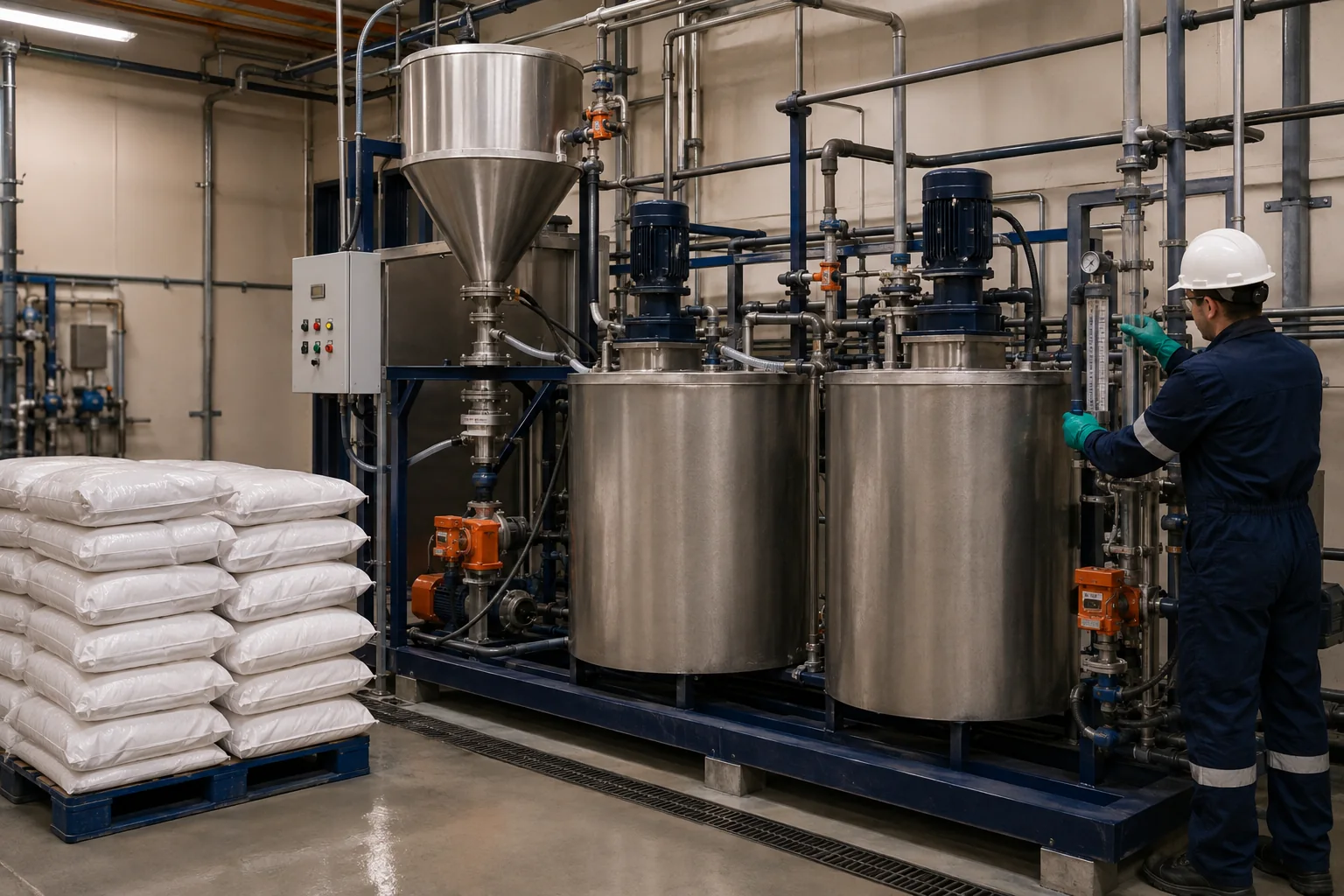
Specify bag size, liner, pallet, marks, order quantity, destination, shipping mode, documents and delivery window. Review dry storage and safe handling before material arrives. Include likely monthly usage and feeder capacity.
For international supply, clarify commercial terms and responsibilities in the actual quotation rather than relying on generic website statements.
Compare cost on the plant result
Normalize delivered price to active and as-supplied consumption. Add preparation, labor, water recovery, separator throughput, sludge transport, cleaning and inventory. Repeat close product comparisons when measurement uncertainty is larger than the claimed difference.
Use the APAM buying guide and structured RFQ to keep technical and supply questions in one record.
Score evidence before commercial preference
Use a simple evaluation that separates technical fit, consistency, documentation, supply execution and total treatment cost. Define critical failures in advance: for example, missing sample identity, no usable SDS, unacceptable overflow, difficult cake or a delivery plan that cannot meet consumption.
Do not let a small price difference outweigh an unrepeatable trial. Conversely, do not pay a premium for broad marketing claims when two products produce equivalent measured results and the lower-cost supplier meets the same control and logistics requirements.
Plan the first shipment
Confirm the approved code and lot documentation before dispatch. Match shipment quantity to realistic consumption, storage capacity and remaining shelf period under the supplier's instructions. Keep the retained trial sample available until the incoming check is complete.
On receipt, inspect bag condition, marks, batch and documents before material enters the make-down area. Run the agreed preparation and application check, then release the shipment through the plant's normal change-control process.