
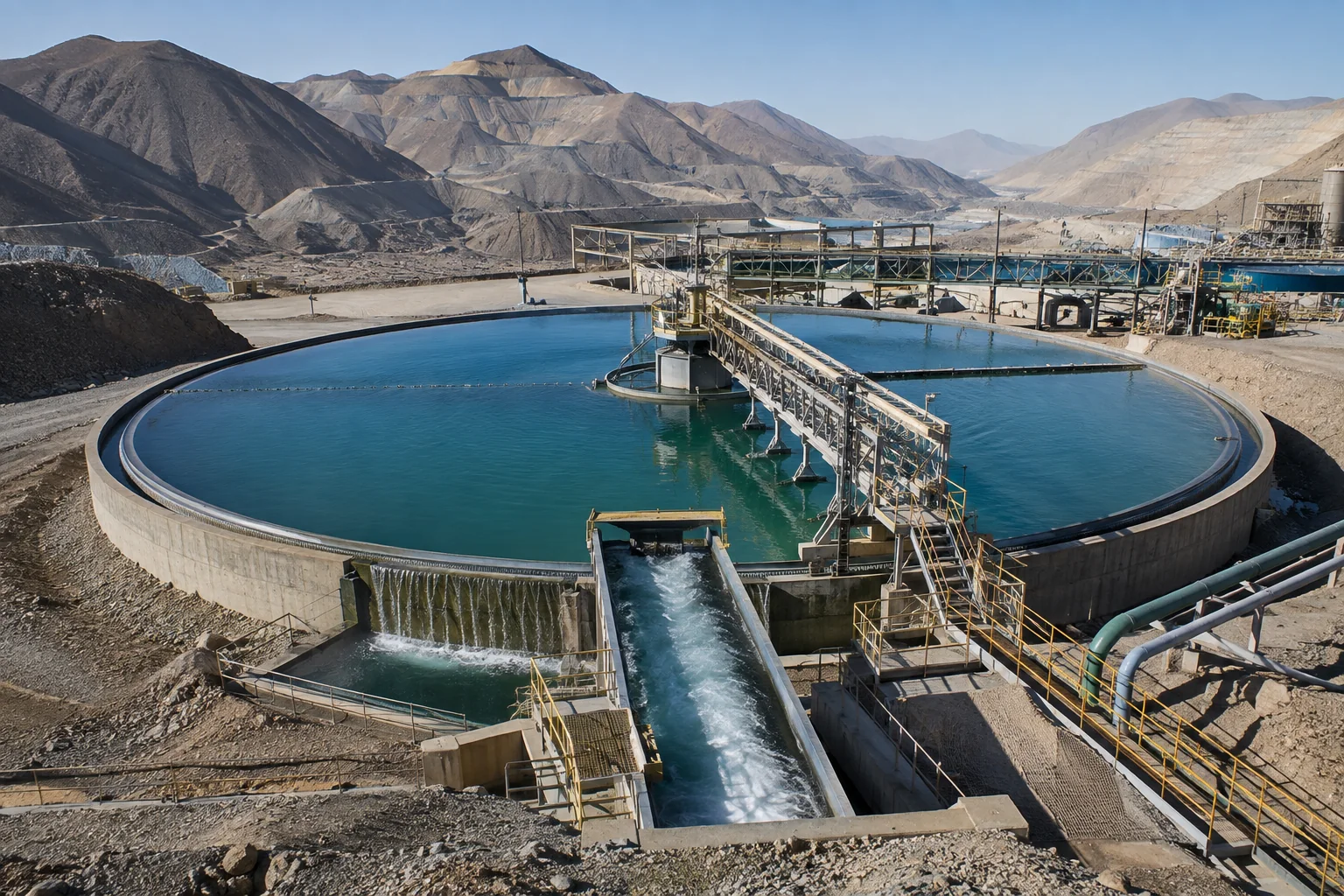
Anionic polyacrylamide is commonly evaluated for inorganic and mineral-rich suspensions, but industry name does not determine polymer charge. The useful application route connects representative feed data, chemical sequence, mixing and a measurable separator result.
Choose the page that matches the plant decision
Mining tailings work balances solids flux, water recovery, underflow and thickener condition. Sand-washing circuits need stable fines capture as recycled water accumulates. Industrial clarification may use APAM after inorganic coagulation to bridge precipitated microfloc.
Each route below identifies the evidence required for a focused sample set and a credible plant trial.
Keep alternative charge families available
Many mineral surfaces are negatively charged, yet anionic polymers can adsorb through specific sites, multivalent ions or coagulant-formed structures. Organic biological sludge often points toward a cationic screen instead. Mixed industrial solids may require direct comparison.
Use anionic versus cationic polyacrylamide to set the first charge-family test rather than relying on a generic industry table.
Carry the dose basis into production
Normalize candidates to active polymer. At plant scale, calibrate the feeder, account for solids loading, protect mixing and allow separator residence before sampling. Record failures as carefully as successful points.