
Reliable anionic polyacrylamide supply starts with the exact approved product code and a plant result tied to that code. Generic descriptions such as high molecular weight or white powder are not sufficient lot-acceptance criteria.
Align the technical record
Request the relevant TDS, SDS and COA format. Confirm which properties are routine release tests, which methods are used and how units or ranges are reported. Do not compare values from different methods as if they were interchangeable.
Retain the approved trial sample and first shipment sample under suitable storage. If plant response shifts, compare preparation, feed and equipment before concluding that the batch changed.
Specify practical packaging
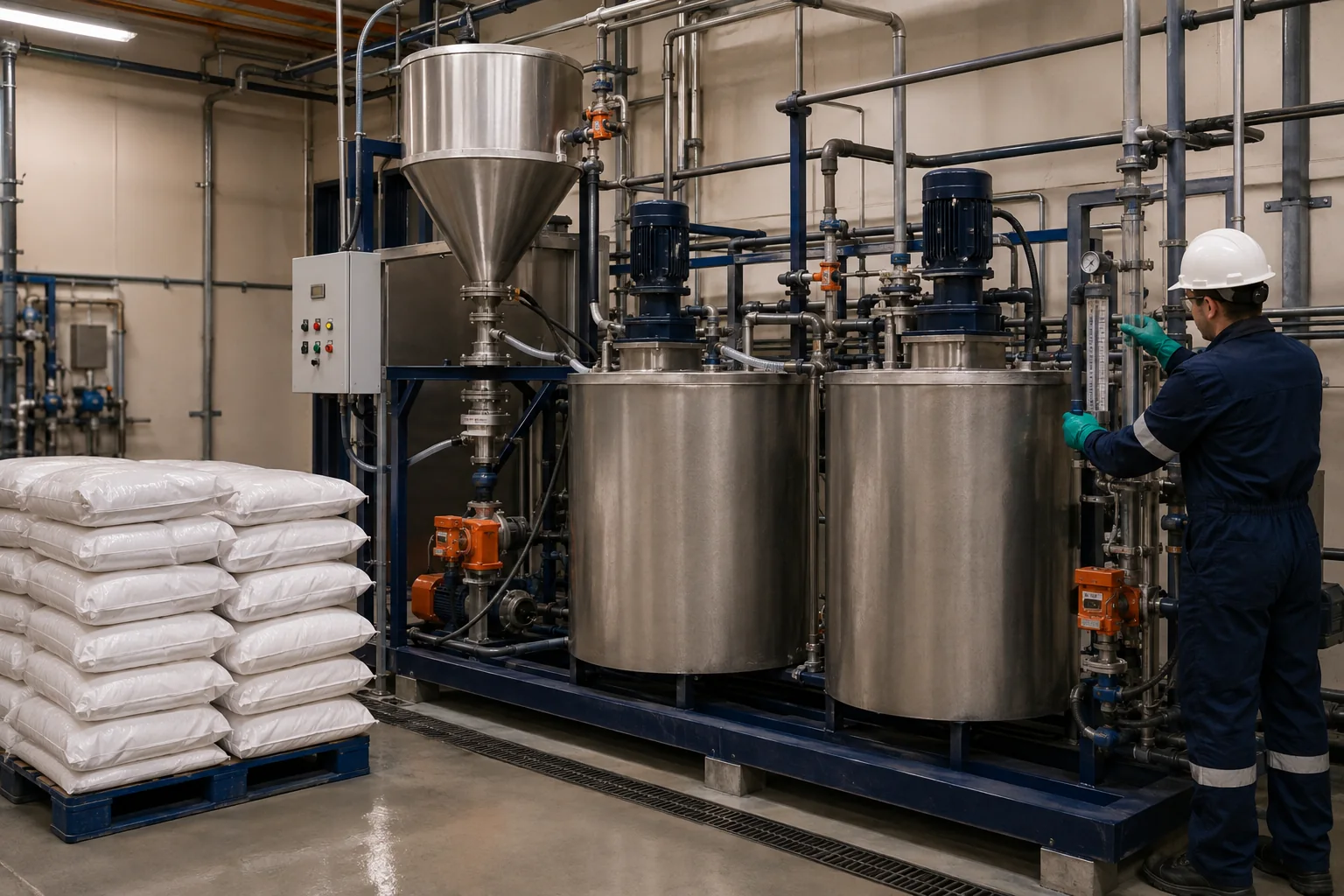
Confirm bag size, palletization, liner or moisture protection, marks required for the destination and container plan. Store dry polymer sealed, off the floor and away from heat, moisture and damaged packaging. Follow the supplied SDS for handling and spill response.
Include realistic monthly consumption, order quantity, destination port or address and required delivery window in the quotation request.
Use a receiving check
Verify product code, batch, quantity, bag condition and documents on receipt. Prepare a controlled solution and run a retained-feed or current-feed check when the operation needs tighter continuity.
A receiving test should confirm identity and expected response; it should not invent a different method from the original approval.
Keep change control explicit
If product form, manufacturing code, specification method or packaging changes, require notification and determine whether a focused requalification is needed. Connect purchasing data to the supplier enquiry checklist.