
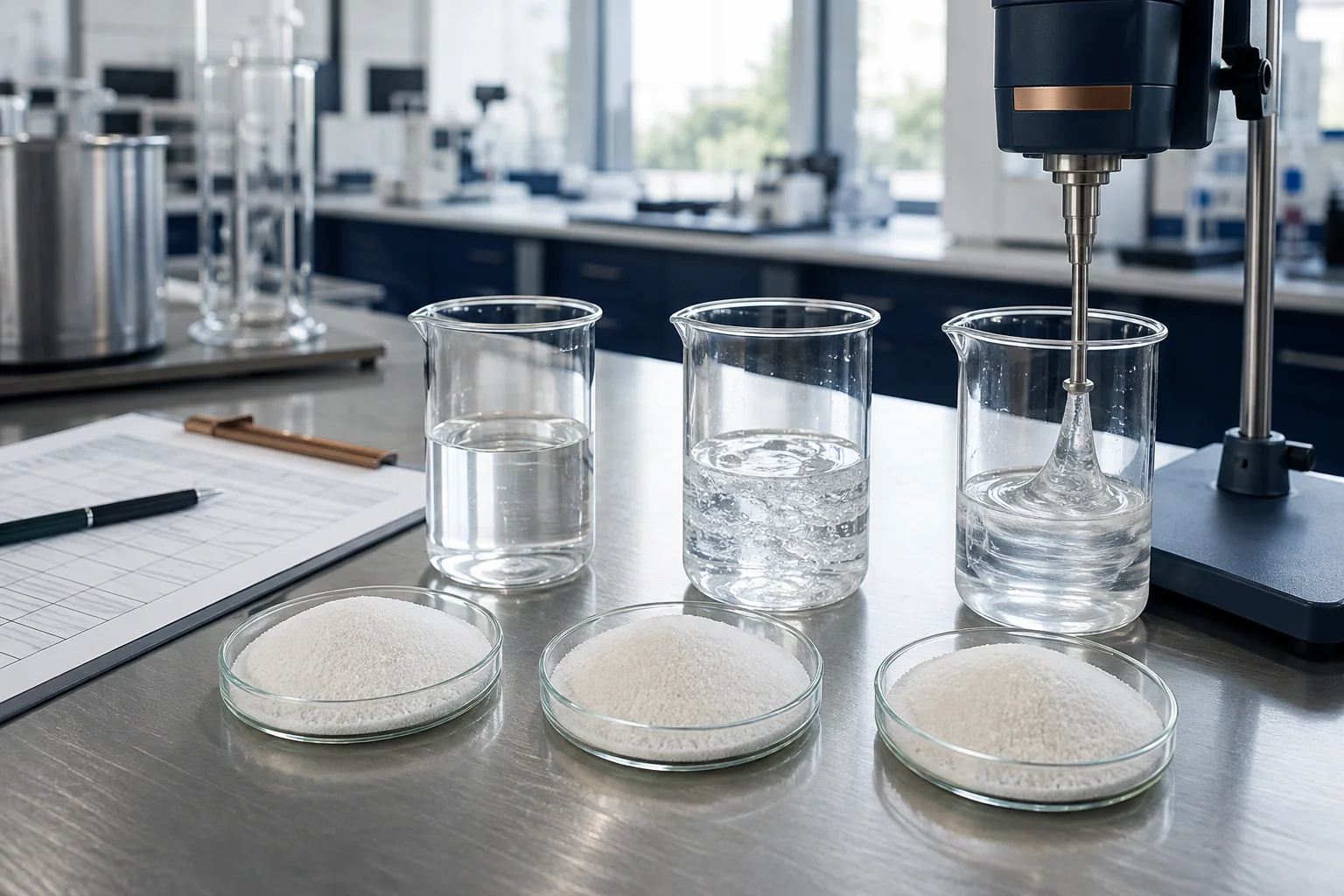
High-molecular-weight anionic polyacrylamide is commonly screened when fine mineral or inorganic particles need long-chain bridging. The useful grade is the one that survives the real mixing path and supports the required clarification, thickening or filtration result.
Where a long-chain profile can help
Fine particles and dilute suspensions may require enough chain reach to connect destabilized surfaces into settleable floc. Mineral thickeners, aggregate wash-water clarifiers and some post-coagulation industrial streams are common screening duties.
The phrase high molecular weight does not identify charge level, architecture or preparation behavior. Request the supplier's tested specification and product code, then compare adjacent candidates under identical conditions.
Watch distribution and shear
A viscous stock stream needs sufficient secondary dilution and a well-chosen injection point. Poor distribution creates local overdose and untreated zones. Excessive pump, valve or mixer energy after floc forms can break the very structures the longer chain created.
Add a defined shear challenge to bench work when plant transfer is severe. Compare both initial floc and recovery after shear, not only the first visual result.
Set acceptance endpoints
For clarification, record settling time, supernatant turbidity and sludge volume. For thickening, add interface velocity, final bed volume, underflow handling and overflow solids. For filtration, measure drainage, filtrate quality, cake release and media condition.
Choose a controllable middle dose rather than the narrow point with the largest floc. Confirm the finalist at plant scale while feed and mechanical settings are stable.
Information for a focused sample
Send feed source, solids, particle character, pH, conductivity, coagulants, equipment, current product and active dose, target result, monthly demand and destination through the APAM sample brief.