
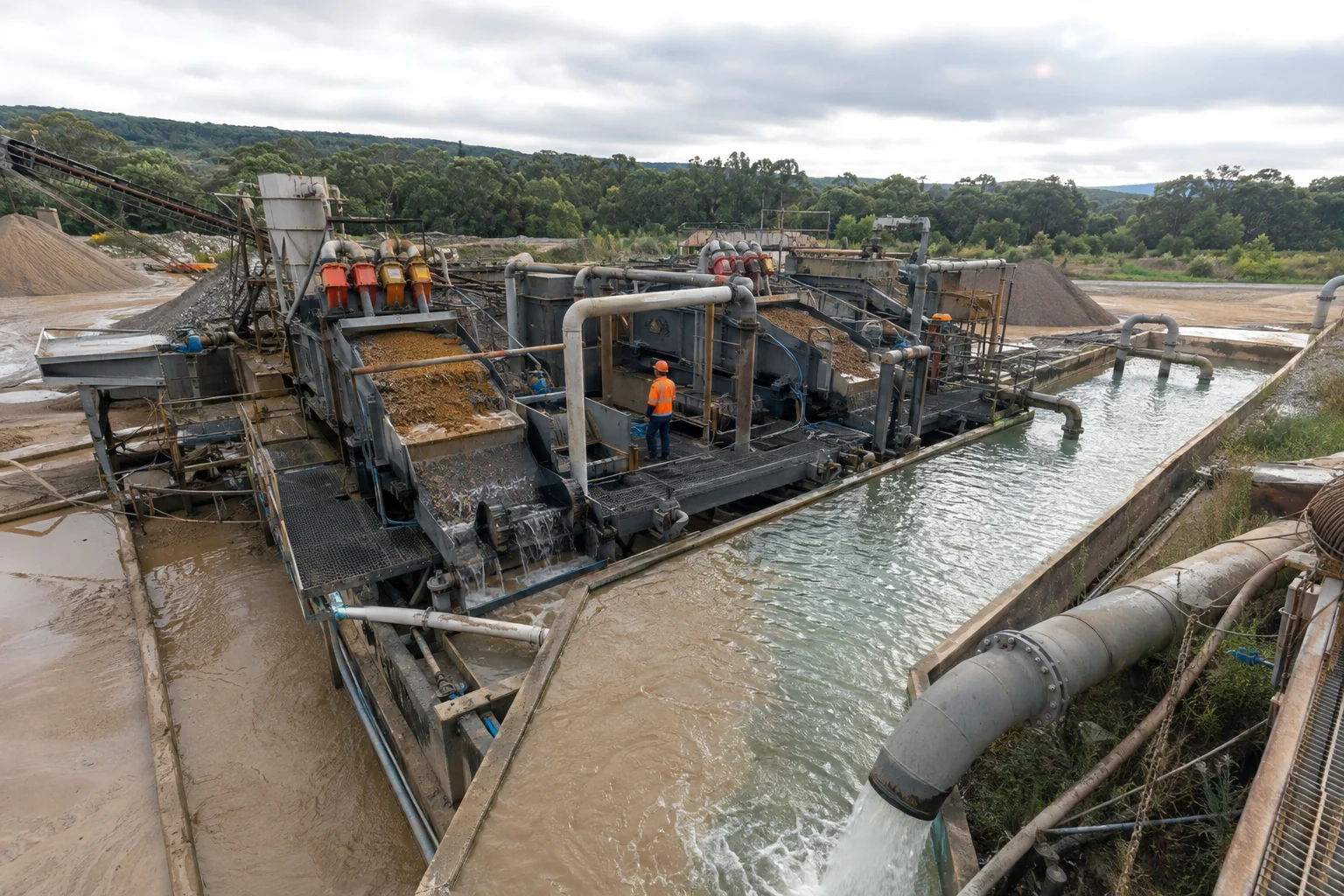
Sand and aggregate washing generates variable silt, clay and crusher fines. Anionic polyacrylamide can accelerate separation, but selection must account for closed-loop water, clarifier capacity and the way concentrated sludge is removed or filtered.
Test the changing fines
Record deposit or feed source, clay indicators, wash-water flow, clarifier feed solids, pH, conductivity and hardness. Note coagulants and the proportion of recycled water. Compare fresh and accumulated water when the circuit chemistry changes through the shift.
Take a well-mixed sample that preserves ultrafines. Settled transport containers can produce unrealistically easy tests.
Follow water and sludge together
Measure settling rate, supernatant turbidity and final sediment volume. In production, record overflow quality, blanket stability, rake condition where relevant, sludge pumpability and water available to the washers.
If a filter press or belt follows, measure filtrate, cake release, cycle time and cloth condition. A clarifier-only result can hide downstream cost.
Control feed and preparation
Calibrate powder and water feeders, confirm maturation time and inspect the injection point. Dose against dry solids where feasible so changes in fines loading do not masquerade as product failure.
Approve a dose band for normal and high-fines periods. Record the product code and batch with the operating sheet.