
A useful APAM trial order is a controlled purchase experiment. Its quantity, timing and acceptance record should be agreed before dispatch, so the plant does not receive material that is too little to evaluate or too much to store while technical questions remain open.
State the decision the trial must answer
Identify the replacement problem: cost at equivalent quality, a different feed envelope, make-down output, filter handling or supply continuity. Set mandatory limits and optional improvements separately.
Document the benchmark code, consumption, preparation and equipment state. A trial with no measured baseline cannot distinguish a real gain from ordinary feed or operator variation.
Estimate the usable trial quantity
Use expected as-supplied consumption, throughput and a planned observation period. Include preparation losses, startup transition and repeat checks where justified. Do not use a universal minimum quantity detached from the plant.
Allow for process residence and steady operation before sampling. A thickener, recycle circuit or batch process may need a different observation period from a simple jar screen. Keep receiving storage and remaining shelf period within the supplier's instructions.
Control the transition
Keep product codes and stocks identifiable. Avoid mixing unknown proportions of benchmark and trial material. Calibrate delivery and confirm how the new stock is prepared before starting the operating comparison.
Preserve enough approved product for rollback and name the operator who can stop the trial. Record any changes in coagulant, feed or equipment; simultaneous changes need explicit treatment in the interpretation.
Use a written acceptance sheet
List measurement locations, methods, timing and responsibilities. Record the useful dose range and relevant clarity, solids capture, underflow, filtration or production endpoints, including the onset of unacceptable behavior.
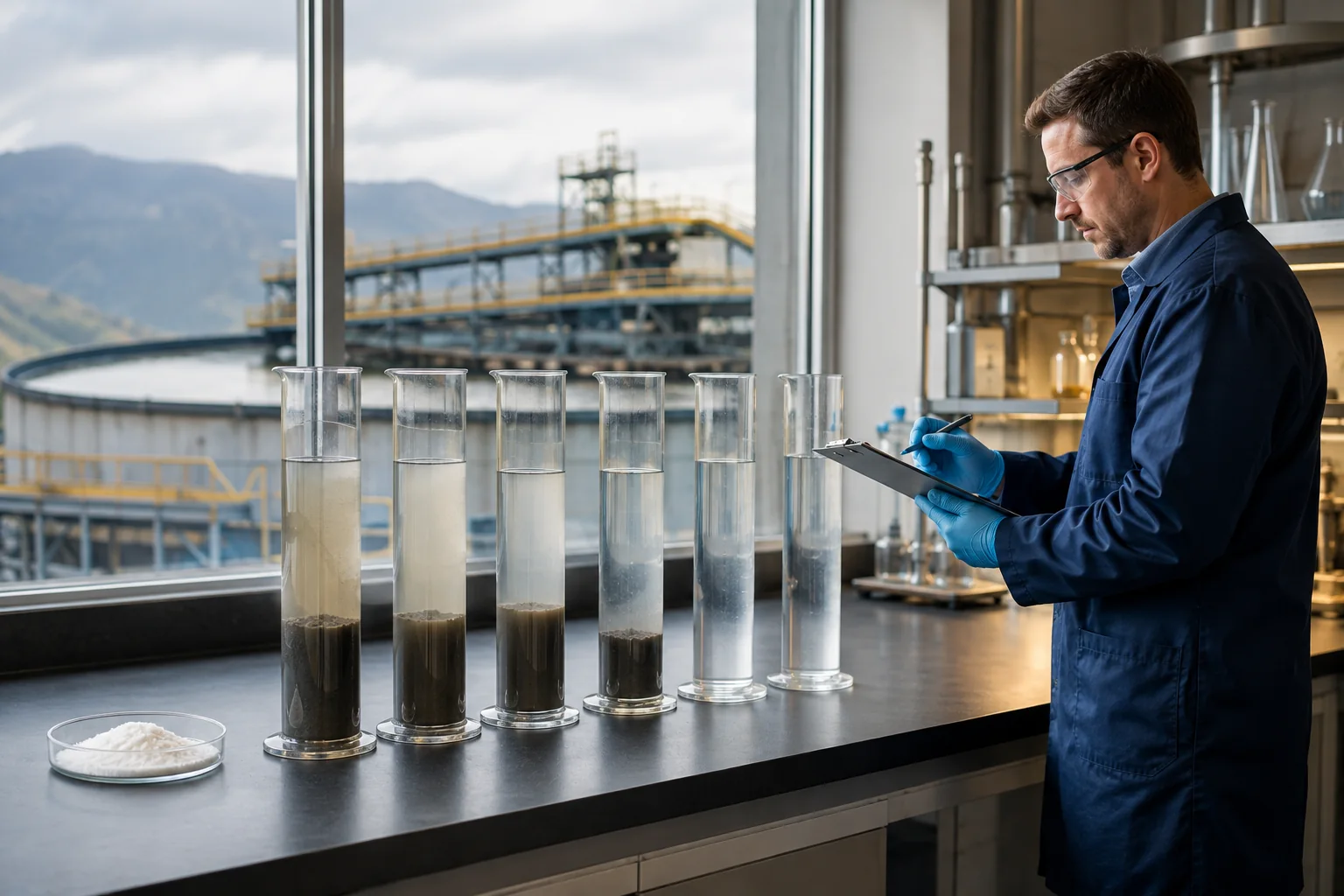
The dose and bench-test guide supports screening. Plant acceptance must add the actual separator and operating constraints rather than treating a favorable cylinder photograph as a complete purchase approval.
Close the order commercially
Confirm sample or trial charges, freight responsibility, packaging, documents and whether successful results require a separate bulk-order quotation. Clarify how unused stock or a failed trial will be handled before the material arrives.
Send the baseline and plan through the APAM trial-order request. Release the commercial supply only when the exact code, preparation and accepted feed envelope are recorded; a supplier's general confidence is not a substitute for the agreed evidence.