
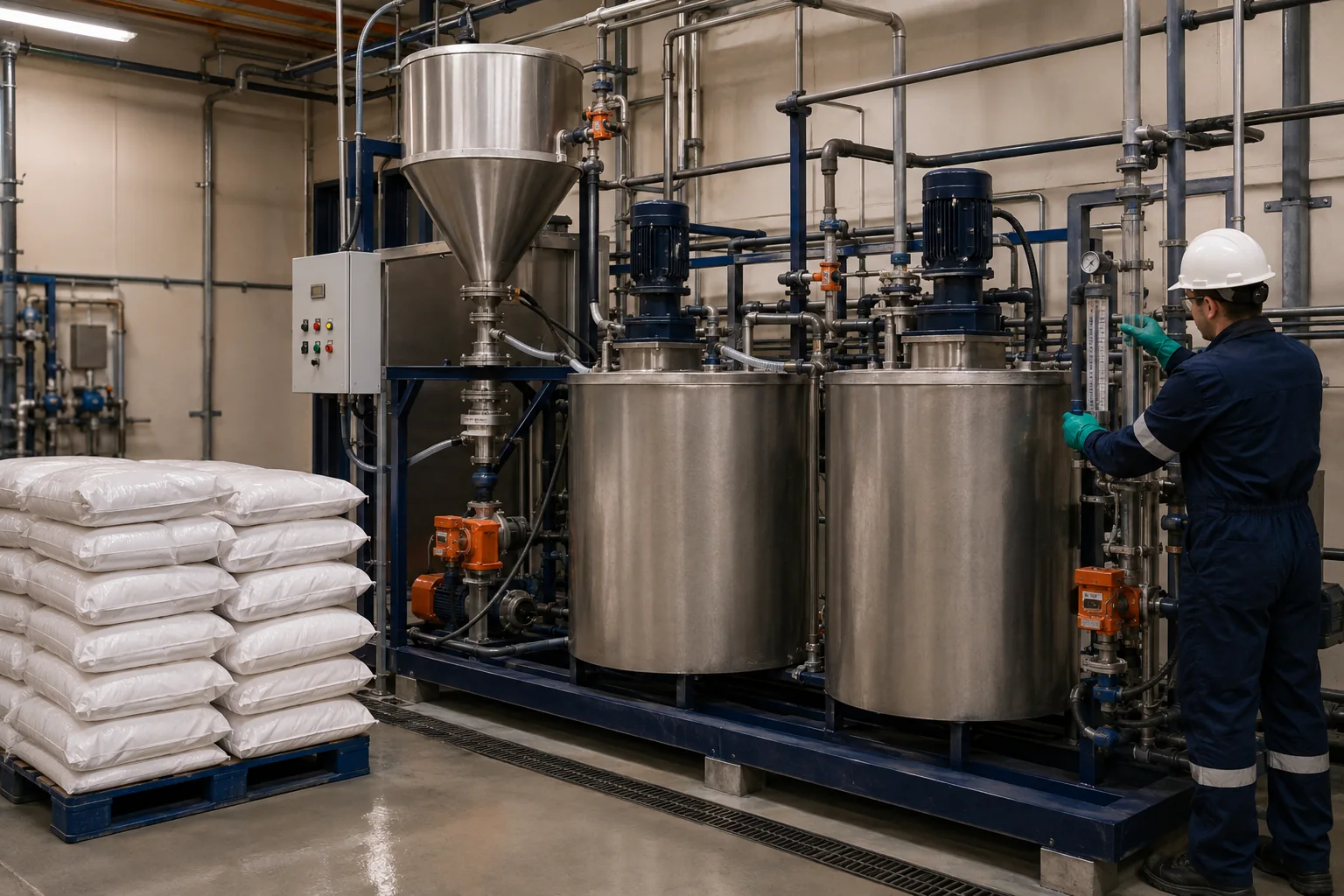
Bag size and delivered tonnage affect the practical cost of an APAM purchase. Standard bags and larger bulk bags need different receiving, lifting, discharge and moisture controls; the cheapest packaging offer may not suit the installed handling system.
Start at the discharge station
Describe the lifting arrangement, rated equipment, hopper, connection and local dust-control provisions. Ask the equipment and safety teams to review the proposed package against their handling procedures.
Confirm how partially used material will remain protected. A large package left connected in a humid area can create a different exposure from individually sealed smaller bags. Do not assume that nominal package capacity equals usable dry inventory.
Request a complete packaging description
Agree package mass, material, liner or moisture barrier, closures, pallet arrangement, marks and product/lot identification. Confirm whether the proposal changes the packaging used in the qualified trial.
Ask for destination-specific transport and handling information through the supplier's documents. Avoid declaring a universal shipping classification or safe handling procedure from the chemical family alone; use the actual SDS and competent logistics review.
Calculate order size from consumption
Use measured as-supplied demand and realistic delivery intervals. Allow for storage capacity, consumption variation, working inventory and the remaining usable period stated for the product.
Include access and stock rotation. A large discount can lose value if slow turnover exposes opened material to moisture or blocks safe movement. Keep reserve stock identifiable rather than combining unrelated lots without a record.
Plan receiving and damage response
Inspect marks, package condition and signs of water ingress before release. Document damaged units and apply the plant's hold procedure. Do not return wet lumps to the feeder as if they were normal powder.
Link the receiving record to the APAM lot-control plan. A retained sample and preparation check are more informative when the exact packaging and storage history remain available.
Compare landed usable cost
Add unloading, handling, required discharge equipment, labor, package disposal and any measurable losses to the delivered chemical offer. Keep one-time equipment changes separate from repeat material cost.
Send demand, storage and discharge details with the packaged APAM quotation request. Ask for both commercially available formats where appropriate, but qualify a major packaging change before it becomes a routine bulk delivery.