
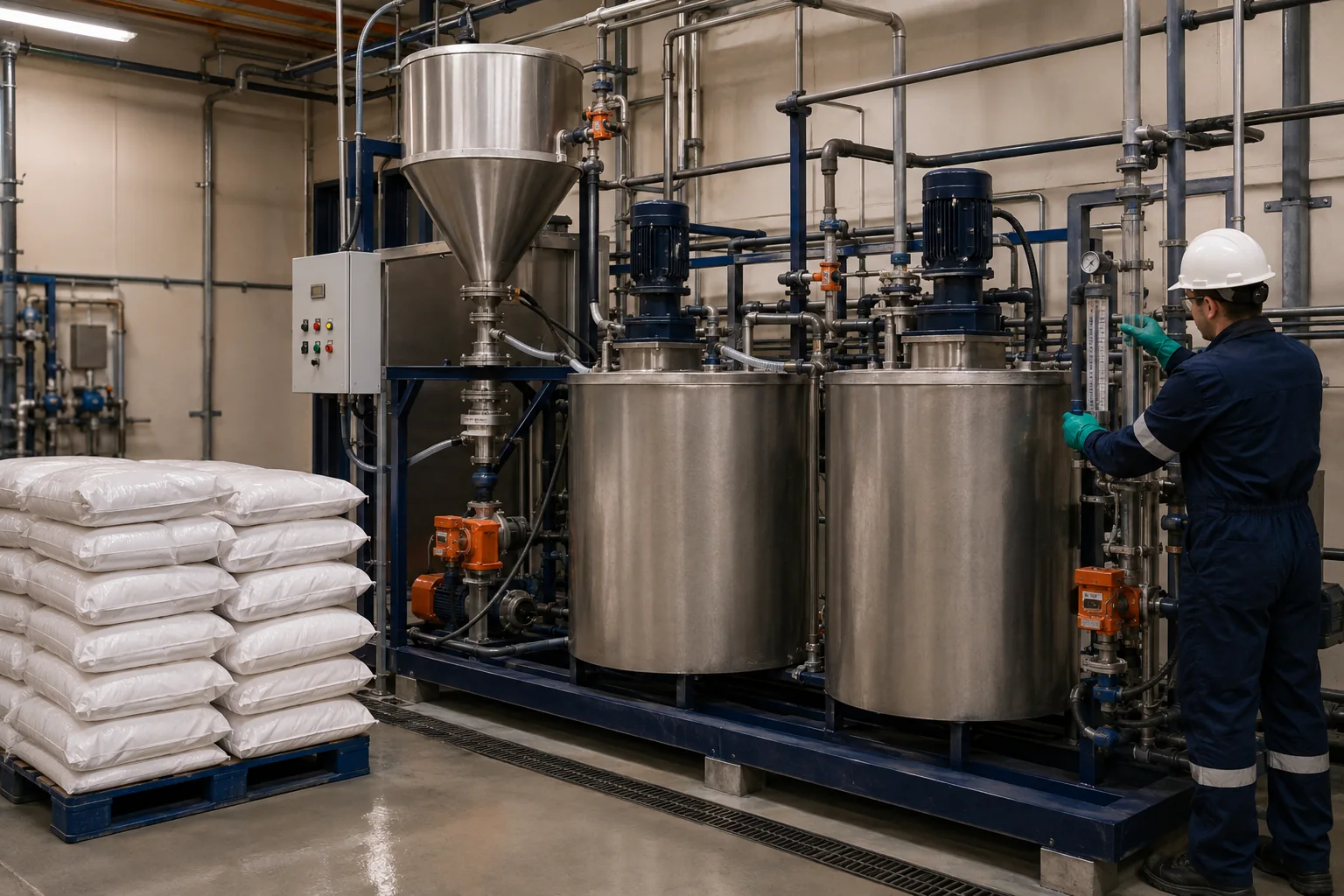
Replacing an anionic polyacrylamide powder with emulsion, or moving in the opposite direction, changes both product delivery and preparation. A purchase based on equal as-supplied kilograms can misstate cost and overlook equipment that the proposed form requires.
Separate form from grade identity
Ask the supplier to name the proposed codes and explain the molecular and anionic profiles. Powder and emulsion are commercial forms, not proof that two products have matching polymer chemistry or separator performance.
Request declared active basis, TDS, SDS and storage instructions for each form. Do not substitute total solids for active polymer without clarification. Check any carrier, surfactant or application-specific restrictions before a plant trial.
Audit the preparation scope
Powder needs controlled induction and hydration. Emulsion normally requires its specified inversion and dilution process; pouring it into the existing powder tank is not a justified changeover method.
Review pumps, water pressure, mixing devices, maturation, secondary dilution, controls and cleaning. Define who supplies equipment modifications, installation and operating instructions. Keep those costs visible rather than embedding them in an unexplained price premium.
Compare representative operating conditions
Test each product using its appropriate preparation procedure, then normalize dose on a documented basis. Compare the same feed and separator target while retaining an existing-product control.
Verify throughput, clarity, compaction or filtration together. A shorter make-down time is valuable only if the stock is usable and the treatment result remains acceptable. Repeat on difficult feed when the plant's duty varies.
Calculate the whole replacement cost
Include delivered consumption, freight, storage footprint, usable stock output, operator work, maintenance and packaging disposal. Separate one-time conversion costs from repeat consumption.
Account for remaining inventory and a controlled rollback. A rushed changeover that mixes uncertain old stock with the new product prevents diagnosis. Preserve enough benchmark material for a meaningful comparison and a safe operational recovery.
Write a staged order approval
Agree a trial quantity, preparation instructions, acceptance endpoints and decision to scale. Use the APAM purchasing guide to keep commercial terms connected to the application result rather than comparing an isolated material price.
Request the proposed form and equipment scope through the replacement-product RFQ. The final order should identify the qualified code and form explicitly; no automatic exchange between powder and emulsion should be assumed.