
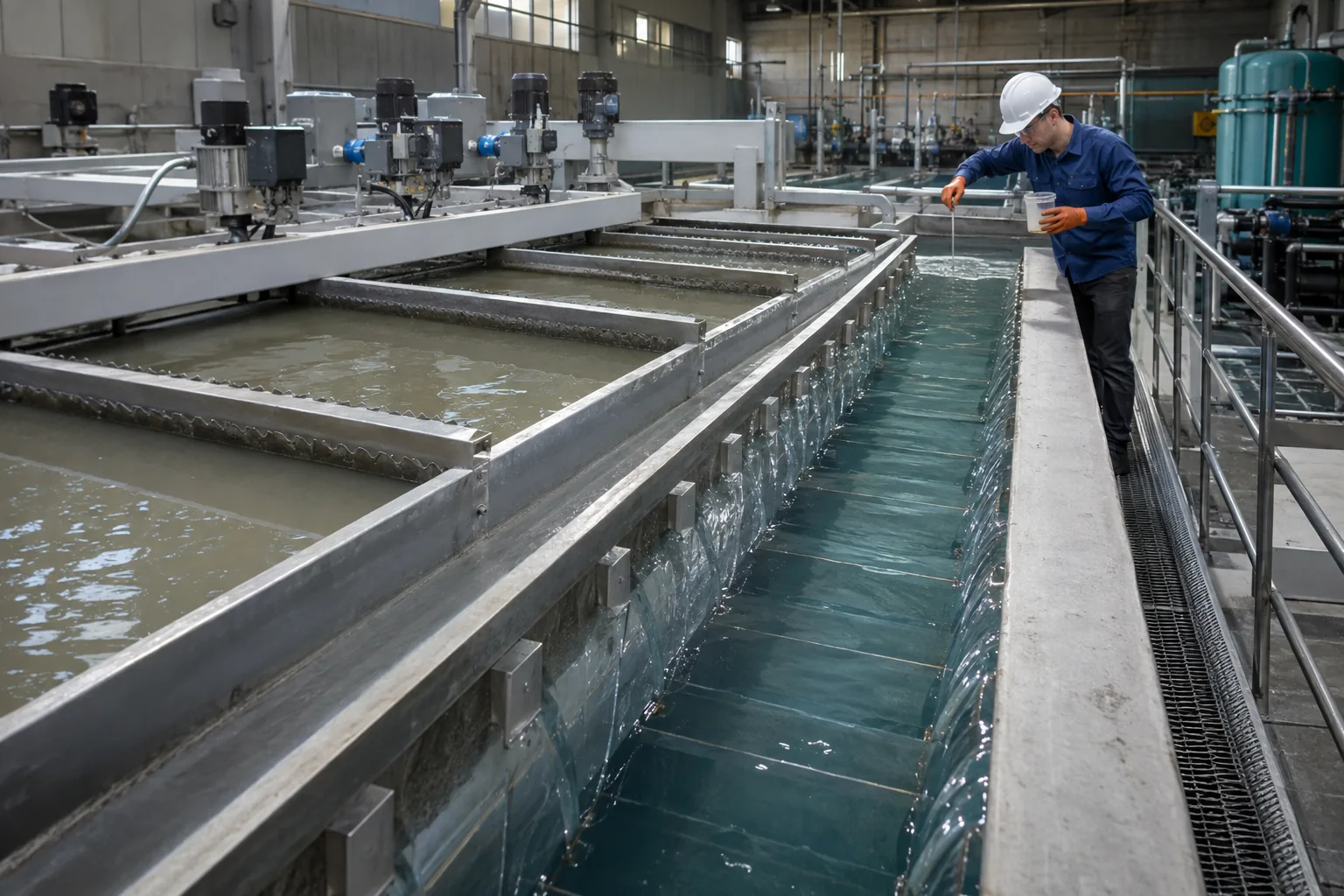
A compact lamella clarifier gives polymer a specific hydraulic and contact-time environment. Anionic polyacrylamide approval should show that the proposed grade works in that environment, rather than depending on extra gentle mixing or settling time available only in the laboratory.
Describe the installed hydraulic path
Provide flow range, feed solids, pH, upstream conditioning, polymer addition point, flocculation volume and plate arrangement. Include sludge withdrawal and the equipment's normal operating limitations.
Ask the equipment owner to confirm the relevant loading and maintenance conditions. Polymer selection should not be used to justify unapproved loading or to compensate indefinitely for fouled plates or hydraulic short-circuiting.
Use the actual contact constraint
Compare stock prepared under production conditions, then reproduce chemical sequence and practical contact before separation. A long bench settling period may rank grades differently from a short compact plant path.
Observe low and high dose behavior, floc strength and supernatant solids. Include an existing-product control and repeat the finalist. Keep jar-test mixing settings as documented test conditions rather than universal operating instructions.
Measure carryover and withdrawal
At plant scale, follow outlet quality over a representative period rather than one favorable grab sample. Record blanket condition, plate deposits and sludge removal. Check pumpability and any downstream filtration.
A product that creates large buoyant or sticky aggregates may require further review even when a static sample clears. Separate effects of air entrainment, density changes and chemical conditioning before naming the polymer as the cause.
Keep the trial interpretable
Calibrate the feeder and verify secondary dilution. Hold coagulant, flow and mechanical settings as stable as practical during the initial comparison. Allow residence before judging the response.
The APAM dose-window method provides the bench framework. Record the additional compact-clarifier constraints explicitly so a purchase approval does not lose the conditions that made the trial successful.
Specify acceptance and rollback
Agree minimum outlet quality, useful dose band, acceptable sludge behavior and a monitored trial duration. Keep benchmark product available and define who authorizes a switch or stops a failing comparison.
Send the equipment and water record through the lamella-clarifier APAM RFQ. A bulk order should name the exact qualified code and any required operating changes; do not interpret general suitability for clarification as equipment-specific approval.