
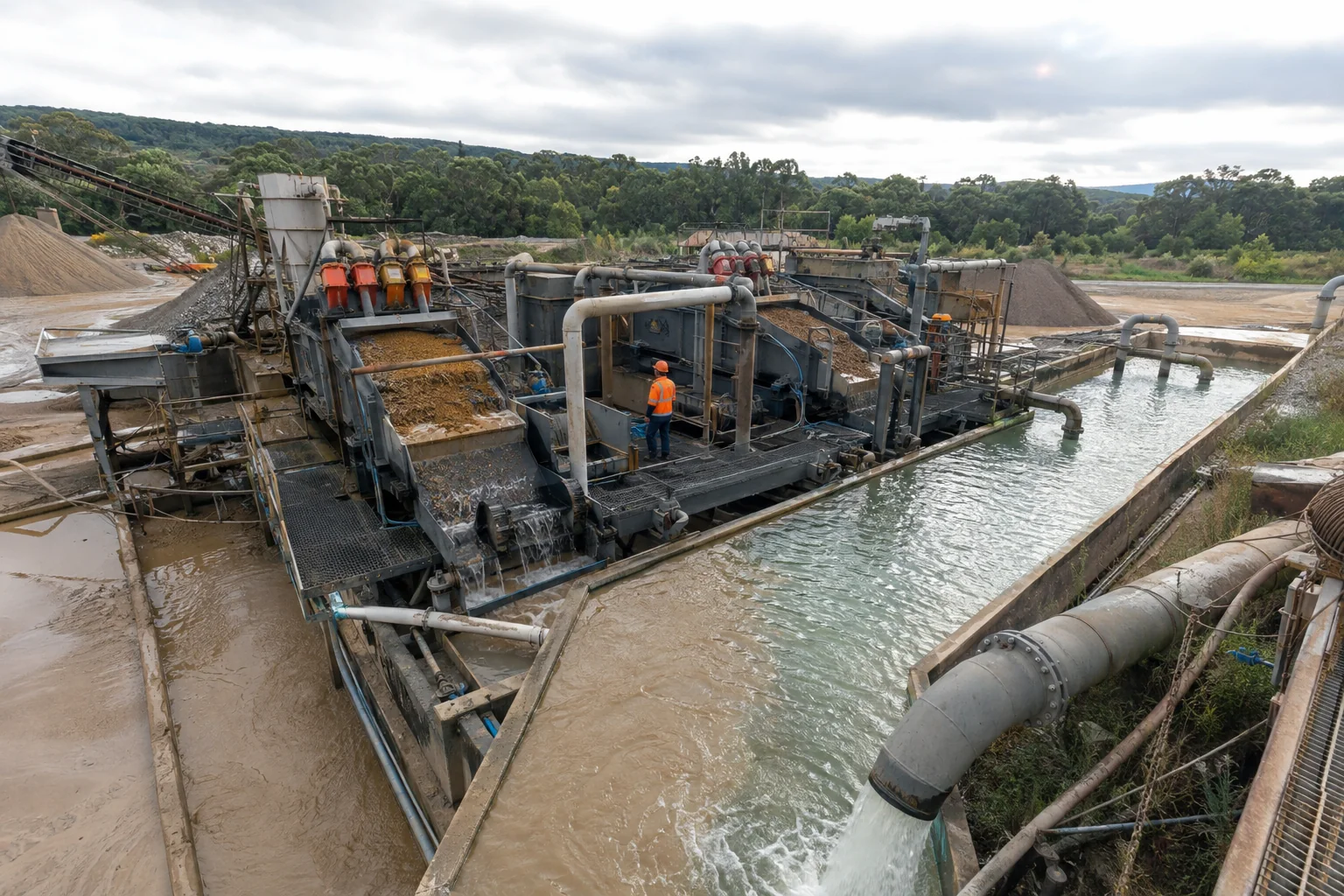
A sand-washing APAM order should follow water recovery through to sludge disposal. A product can make the clarifier overflow look good while increasing press-cycle time or producing sticky cake; the purchase record needs to expose that trade-off.
Map the two separation stages
Record where polymer enters, whether the press receives a separate conditioning chemical and which stock system serves each duty. Identify clarifier type, sludge withdrawal, buffer storage, press media and normal cycle.
Provide aggregate source, clay-rich intervals, fines distribution, feed solids, pH and recycle-water chemistry. Wash plants often change feed faster than a single bench sample suggests. Include a difficult but representative condition in qualification.
Screen the clarifier without ignoring sludge
Prepare stock under the intended water and maturation conditions. Compare dose curves with the current product while keeping upstream coagulation fixed. Measure settling, overflow turbidity or solids, sediment volume and handling.
Record sludge residence before the press. A freshly prepared jar sample may not resemble aged buffer-tank feed. Where shear or storage changes floc, reproduce that step before drawing conclusions about filter behavior.
Test the press on its own terms
Measure filtrate quality, filtrate-volume development, cycle duration, cake release and the plant's accepted cake endpoint. Keep cloth, feed pressure and operating sequence comparable.
A faster initial drainage observation does not establish a shorter complete cycle. Include filling, squeezing where applicable, discharge, cleaning and any manual intervention. Record whether altered solids concentration, rather than polymer identity, explains the difference.
Compare operating cost over the route
Use chemical consumption for both stages, useful recycled-water output, press throughput, disposal mass, operator time and cleaning. Keep any change in coagulant or press polymer visible.
The aggregate water-recycling route identifies the basic feed and water record. Link that record to the filter result rather than allowing two teams to approve conflicting halves of the same treatment program.
Define a route-level trial order
Agree quantities and duration sufficient to observe normal cycles at both separators. Preserve benchmark stock and permit only controlled changes in feed or equipment during the comparison.
Send the combined route sheet through the sand-washing APAM request. The order should name the qualified code and both acceptance boundaries, with a separate approval if the downstream conditioning chemistry must change.