
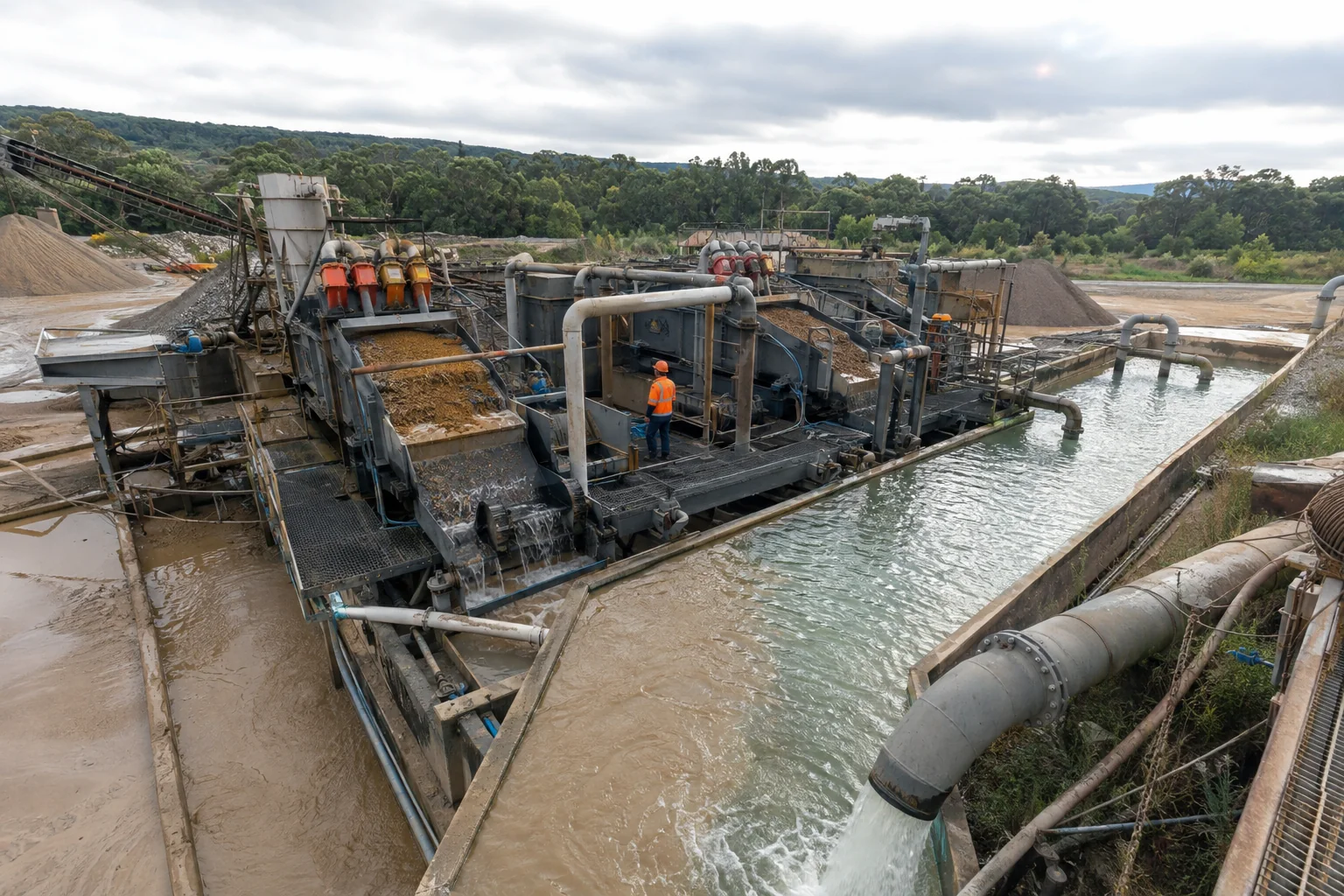
Stone-cutting and polishing water can carry different fines and additives from one production line to another. Anionic polyacrylamide procurement should therefore define the water-recovery duty and the solid-handling limit before asking for a bulk price.
Record the production mix
Identify stone types, cutting versus polishing streams, abrasive or polishing additives, cleaning chemicals and any oil contamination. Provide solids, particle character, pH, conductivity and normal flow variation.
Collect mixed representative feed without discarding settled fines. If lines differ materially, test them separately and then in the real combined proportion. A sample from a quiet shift can understate the demand during high-production periods.
Define reusable water quality
Ask the production team what the recovered water must achieve at saws, nozzles, washers or polishing equipment. Specify the relevant solids or clarity measure and any other quality constraint controlled by the process.
Visual clarity is useful but does not establish removal of dissolved salts, oils or all additives. Do not claim that flocculation alone makes every stone-water stream suitable for unrestricted reuse. Identify any separate treatment that remains necessary.
Compare the actual chemical sequence
Use untreated and current-product controls, keeping pH and coagulant conditions fixed where they form part of the program. Prepare APAM consistently and record commercial dose basis, stock age and mixing.
Measure settling, overflow quality and settled volume over a useful dose range. If a candidate shows little response, verify preparation and feed chemistry before requesting a larger molecular number or increasing dose without a limit.
Follow sediment through removal
Check sludge pumpability, withdrawal intervals and downstream press operation if present. Rapid settling that overloads sludge removal can destabilize the clarifier even when individual jars look successful.
Estimate demand from measured commercial consumption and representative throughput. Include make-down capacity, bag discharge, dry storage and delivery frequency. The powder preparation record helps distinguish product demand from avoidable preparation losses.
Order against a bounded production range
Agree a sample-to-plant progression, accepted water result, sludge condition and trial material quantity. Keep a retained control and record the approved stone mix and chemical program.
Use the stone-water polymer enquiry to request proposed grades and a delivered quotation. Require review when polishing chemistry, stone source or production mix changes outside the qualified range rather than assuming one successful trial covers every future stream.